



It sounds too good to be true. London to Brussels by Eurostar in just a couple of hours, a leisurely margarita in the Hotel Pullman bar at Brussels Midi, then overnight to Italy on a sleeper train with glimpses of Germany’s Rhine Valley in the moonlight and breakfast with spectacular Swiss Alps views the next morning.
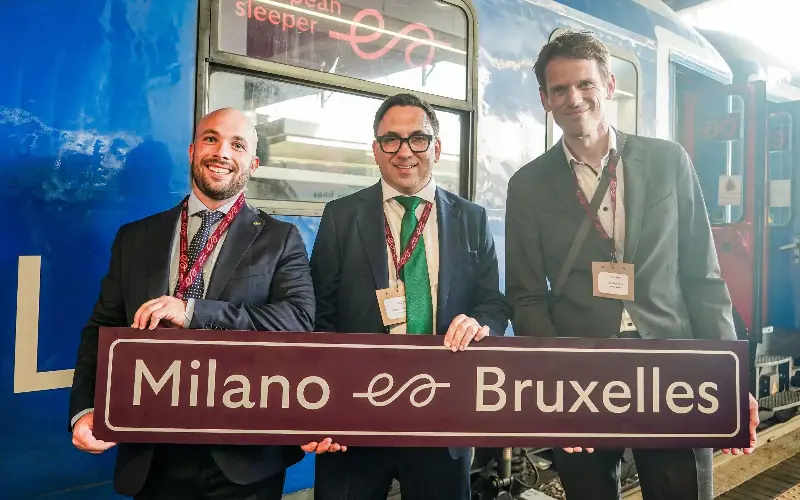
Last week, European Sleeper, the crowd-funded Belgian-Dutch company, made this a reality, launching a three-times-a-week overnight service from Brussels to Como and Milan. The new route joins the firm’s existing Brussels-Berlin-Prague sleeper, which began in 2023, and its Paris-Brussels-Berlin route, which debuted in March.
Sleeper trains have been enjoying a modest renaissance across Europe as travellers look for a more environmentally sustainable and relaxing alternative to a low-cost airline experience that is at best soulless and at worst unpleasant.
But it’s not easy. The demand is there, the problem is cost. Sleeper trains are the most difficult type of train to run commercially, requiring specialist rolling stock that can only make one loaded journey per 24 hours, carrying 20 people in sleeping berths in a 26m-long carriage that could accommodate 70 passengers in seats on a daytime run. Staff costs are also higher, and there are extra overheads such as bedding.
Spanish national operator Renfe doesn’t think sleeper trains can ever be profitable, which is why you will now find no sleeper trains anywhere on the Iberian Peninsula. But others, such as Austria’s ÖBB and European Sleeper, believe these trains can be a success, albeit with only a small margin.
Profitability isn’t the only challenge. European Sleeper has had to battle railway bureaucracy in four countries with differing requirements and processes to run this train. Rolling stock is another issue. Only a limited range of older rolling stock is available to lease because most national operators stopped building sleeper and couchette cars in the mid-1990s, when budget airlines appeared.
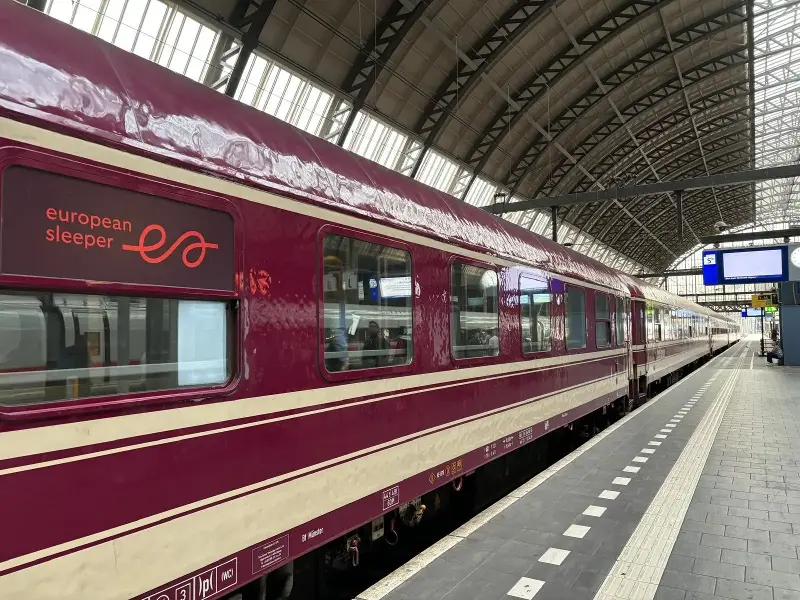
European Sleeper mostly uses former German Railways carriages from the 1980s and Nineties, but the sleeper cars used on this route are even older. Their distinctive stainless-steel bodyshells date from the mid-Fifties, although the interiors and the plumbing and electrical systems were rebuilt in the Nineties.
Given the hurdles, it was a major achievement just to get this train up and running. Booking opened in March, and I eagerly bagged a private, single-berth compartment on the inaugural southbound sleeper, leaving Brussels on Sept 10.
The late show
Departure day arrived, and all went perfectly – as far as the margarita. Striding across the concourse at Brussels Midi for the scheduled 19.06 departure, an ominous “+1h30” had appeared on the departure boards. A text message from European Sleeper blamed “cleaning and provisioning logistics”. Word on the street (or rather, platform) was that a minor shunting mishap at the depot at the Belgian town of Denderleeuw had caused the delay.
Before long, “plus 1h30” became “plus 1h40”, then “plus 2h30”, before finally, at 21.50, the first Brussels-Milan European Sleeper service arrived at platform six. There was no shortage of passengers, and the company’s co-founder Chris Engelsman tells me that ticket sales have been strong, particularly among British travellers.
I had booked a single room in what European Sleeper calls “Comfort Standard”. The single, double and triple rooms in the sleeping-cars (Comfort Plus) typically sell out first, ahead of the more numerous and cheaper bunks in shared four-person and six-person couchette compartments (Classic).
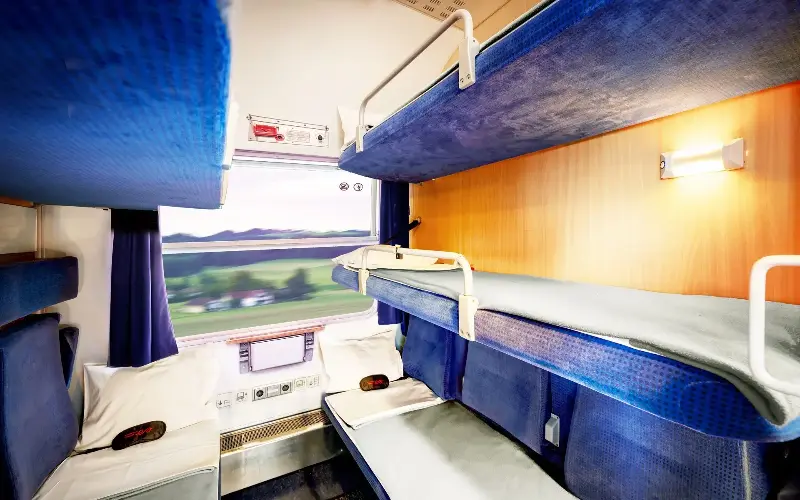
Responding to demand, European Sleeper has equipped compartments in two couchette cars with sleeper-quality mattresses and duvets, and sells them as Comfort Standard for single, double or triple occupancy. Forty years ago, sharing a six-berth couchette compartment was the accepted norm of sleeper-train travel, but today’s travellers increasingly desire privacy.
My Comfort Standard was a former Deutsche Bahn six-berth couchette compartment with the right-hand side made up as a spacious sofa and one upper berth folded out above it. Although I’d booked it as a single, another two berths were set up with a mattress and duvet on the left-hand side of the compartment. There was a large picture window, a small table, a rather cute table lamp, two power sockets, and a good-sized recess for luggage above the door. Drinks and snacks were available from the train staff, but I had raided the Carrefour Express at Brussels Midi for a pasta salad and wine.
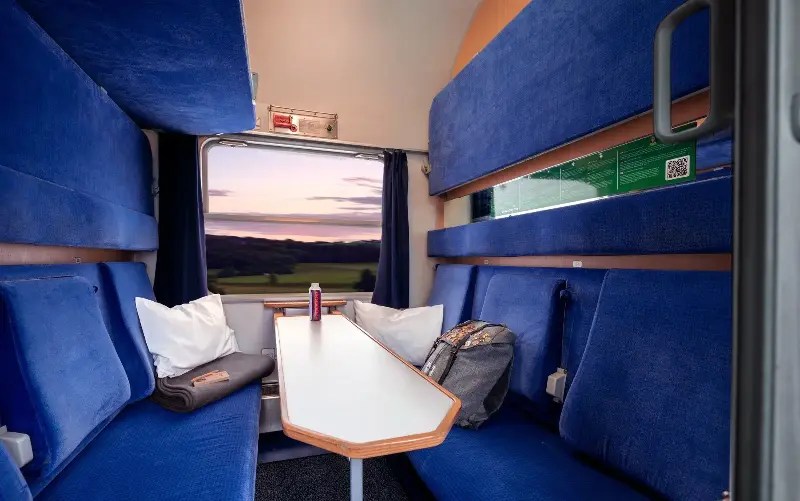
The delay put paid to any hope of seeing a moonlit Rhine Valley – we would be passing the legendary Lorelei rock, south of Koblenz, in the small hours – so I climbed into bed. The couchette bunk was a little firm, but with a mattress and duvet added it was as comfortable as any proper sleeper.
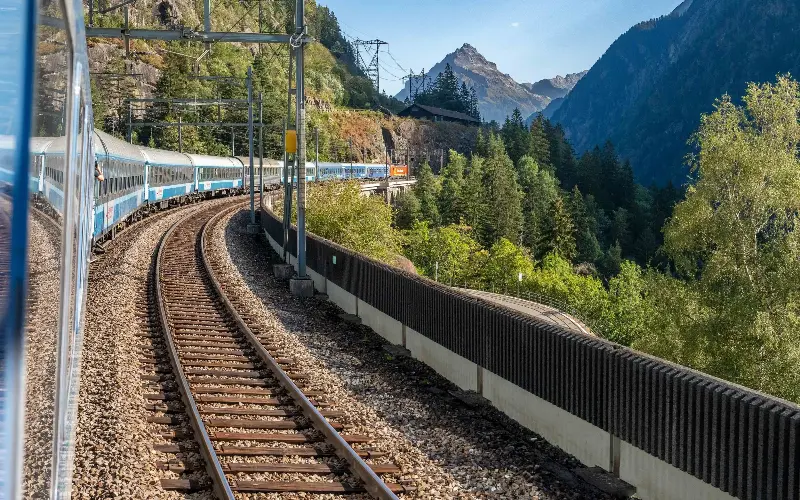
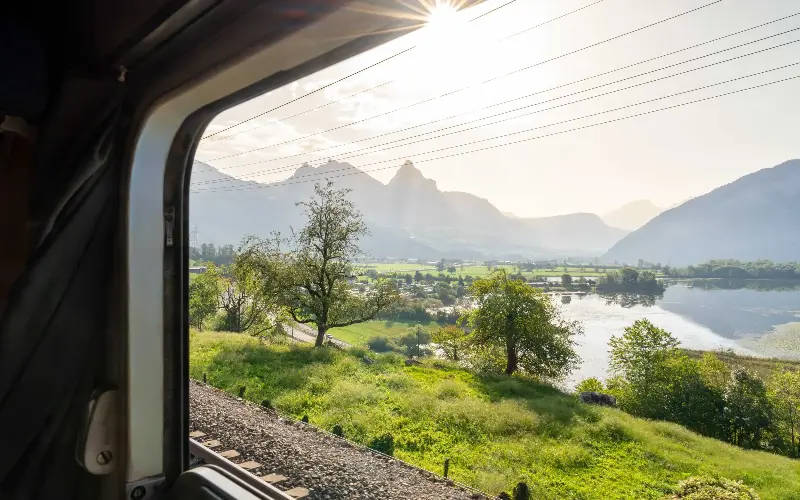
I woke up in Basel, Switzerland, to find we were running more than three hours late. But there was a silver lining. It was a glorious sunny day and south of Aarau the train started its climb up and over the historic Gotthard route through the Swiss Alps. Other international trains now use the Gotthard Base Tunnel, opened in 2016 and currently the world’s longest rail tunnel at 35½ miles (57km) long. It saves an hour, but passengers miss the best scenery.
Mountain views
Our train snaked around the pretty village of Wassen, fluffy wisps of light-grey cloud garnishing the opposite mountainside, only a little higher than the railway. An attendant appeared with my breakfast: a welcome cup of coffee, a roll and a small box containing jam, cheese, yogurt and orange juice. At Göschenen, a 10-minute pause was enough to stretch my legs on the platform in the cool mountain air, until whistles summoned me back on board. After Göschenen the train entered the original Gotthard Tunnel, a nine-mile engineering marvel when it was opened in 1882. Inside the tunnel the train reaches the line’s summit, some 3,776ft above sea level.
The descent was equally scenic, the line spiralling around leafy mountainsides. The train stopped at Bellinzona and Lugano then rattled along sparkling Lake Lugano. By now a key advantage of old-school rolling stock had become apparent. I could open the windows. There was a lengthy stop at Chiasso on the Italian border for the locomotive to be changed, then the briefest of glimpses of Lake Como before a stop at Como San Giovanni. Finally, some four hours after its scheduled arrival time of 11.40, the inaugural European Sleeper from Brussels rolled into Milan Porta Garibaldi.
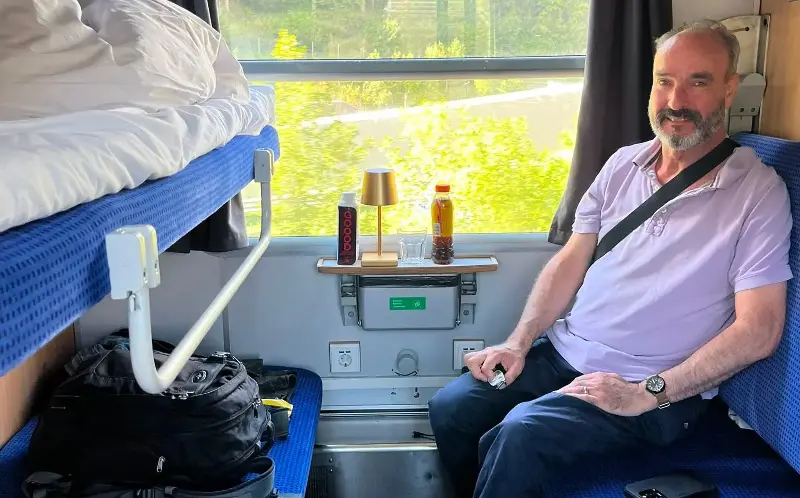
As inaugural departures go, there were more teething problems than European Sleeper would have liked. But a key new sleeper route is now a reality, offering old-school comfort and spectacular scenery – and I think it’s going to be popular. It’s an adventurous alternative to a soulless low-cost flight. And next time, maybe I’ll stay up for that moonlit Lorelei.
How to do it
Mark Smith travelled to Italy using a four-days-in-one-month Interrail pass, which cost €212 if you’re under 28, €283 for an adult, or €255 if you’re over 60. Accompanied children under 12 get a free pass.
Only one of the four travel days was needed for this southbound journey from the UK to Milan, covering train travel from any British station to London, London to Brussels by Eurostar (€35 passholder fare payable, book here) and Brussels to Milan by European Sleeper (berth reservation fee payable, book here).
For the European Sleeper, passholder reservations start at €52 for a berth in a shared six-berth couchette compartment. A private single room in Comfort Standard costs €169.