



Dear Alex,
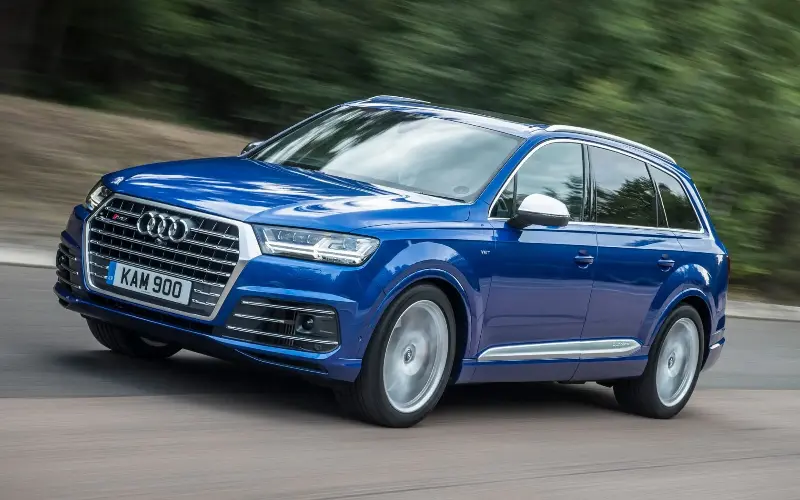
I purchased my 2018 Audi SQ7 in April and the engine seized after only three weeks. The selling dealer had a supposedly independent company check the car. They said the fault could have been due to the way it had been driven, so I couldn’t return it for a refund. I have now been told the damage resulted from a problem with the oil pressure valve, which is apparently too small for a car of this power. Is there any way of getting Audi to pay for the repair, even when it’s out of warranty by a year?
– JC
Dear JC,
Unless the car had an extended warranty, it’s out by far more than a year; the original warranty would have expired in 2021, so I think the chances of Audi contributing to any repair are slim-to-none.
But the Consumer Rights Act 2015 says that the dealer must accept the car back for a full refund if a fault that results in the car not being of satisfactory quality crops up within the first 30 days. I’d say that a seized engine counts.
The onus is on the dealer to prove that the car was not faulty at the time of sale. Perhaps the verdict of this “inspection” had an ulterior motive; by blaming your driving, the dealer may have been trying to suggest that that would have been the case.
In other words, it sounds to me as though the dealer is fobbing you off because it doesn’t want to be responsible for an expensive engine repair bill.
Of course, this doesn’t count as proof. So before you go any further, have the car inspected by a reputable automotive engineer accredited by the Institute of Automotive Engineer Assessors (IAEA). You can find your nearest by going to this website.
This will provide an accurate second opinion from a genuinely independent third party. Armed with this, you’ll have proof (I hope) that your driving wasn’t the issue and that the car was faulty. The next step will be to get the dealer to agree to refund your money.
First, research the ins and outs of the act. Then explain to the dealer, in writing (as all communication should be from now on), that you expect to return the car for a full refund under the terms of the act.
If they try to tell you you can’t, make it clear that you have the independent, third-party engineer’s report to back you up and that you’re prepared to take the dealer to court to get your money back. If they still refuse, you’ll have no choice but to act on your threats.
It won’t be easy. But given the costs involved in replacing an SQ7’s engine, I’m fairly confident it will be worthwhile. As I always say, I’m not a trained legal professional so I would strongly recommend taking legal advice before proceeding.
Dear Alex,
We have had a succession of Minis from our very first brand new car, a bright red Mini Van in 1973, and loved every one. But as we’ve grown older our Minis seem to have grown lower and more difficult to get in and out of, so we need something higher than our current Clubman. We do about 8,000 miles a year, mainly short journeys but also a number of longer trips. We are considering a nearly new Countryman, but we wonder what the ride would be like; passengers in the back of our Clubman complain about the harsh ride. Would the same be true in a Countryman? If so, what else would you recommend?
– RE
Dear RE,
I’ve driven a couple of Countrymans (Countrymen?) and I didn’t find the ride quality too upsetting, although I’d suggest a Classic or Exclusive model, with smaller wheels and softer suspension, avoiding the Sport and John Cooper Works versions.
However, my experience was limited to a fairly short drive, while I didn’t get a chance to sit in the back while someone else drove, so I couldn’t say for sure whether it’ll be soft enough.
So take a test-drive, taking turns to sit in the back to assess the ride; only then will you know whether the suspension is too harsh for your tastes.
An alternative that matches the retro charm of the Mini is the Fiat 600. It certainly looks the part and feels quite chic within, the large, round binnacle and huge body-coloured insert spanning the dashboard making it feel special.
It also has pretty soft suspension, so it should be more comfortable than the Countryman, although be prepared for the fact that it won’t be as much fun to drive. And I’d definitely go for the extended warranty, given Fiat’s rather dubious reliability record.
Or consider a Lexus LBX. It’s not as fun to look at as a Mini, but it is quite smart and should match the Countryman’s premium feel inside. While the ride can be a touch unsettled at low speeds, the LBX is far from uncomfortable and has a languid lope on motorways that’s surprisingly mature for such a small car.
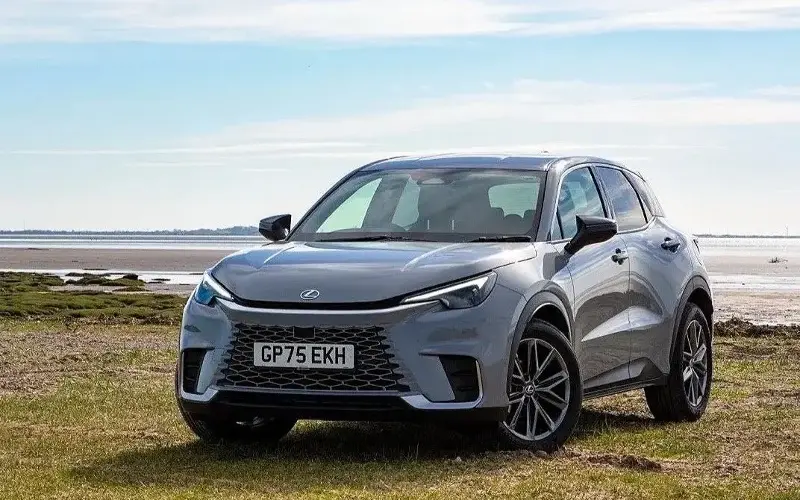
Crucially, though, the LBX has a superb record for reliability, which is backed up by a warranty that can run for up to 10 years if you use a main dealer for servicing.
In addition, its hybrid powertrain ensures the LBX is one of the most frugal small SUVs – especially on shorter urban journeys, where hybrids tend to be at their best.
So while it might not appeal to the heart quite as much as the Mini or the Fiat, the Lexus appeals to the head as the most pragmatic option.
Do you have a question? Contact [email protected]