



After a period of relative stability, gasoline and diesel prices in Vietnam increased sharply in the price adjustment on September 24th. Accordingly, E10 RON 95-III gasoline is priced at 27,080 VND/liter, an increase of 1,450 VND; E5 RON 92 gasoline increased by 1,260 VND, reaching 26,390 VND/liter. For those who frequently use cars, especially gasoline or diesel vehicles, this increase makes fuel costs a significant expense in their vehicle usage budget. Many drivers are therefore changing their driving habits to save fuel. However, not all methods are effective; some may even lead to increased fuel consumption.
Here are 5 driving habits that seem economical but can actually make your car consume more fuel:
Drive slowly to "save fuel".
One common misconception among car drivers is that the slower the car, the less fuel it consumes. However, low speed doesn't necessarily mean low fuel consumption. When driving too slowly, especially when constantly accelerating, decelerating, and maintaining the car in low gear, the engine can become inefficient. The car also takes longer to reach the appropriate speed, while the driver may have to press the accelerator multiple times to maintain motion.
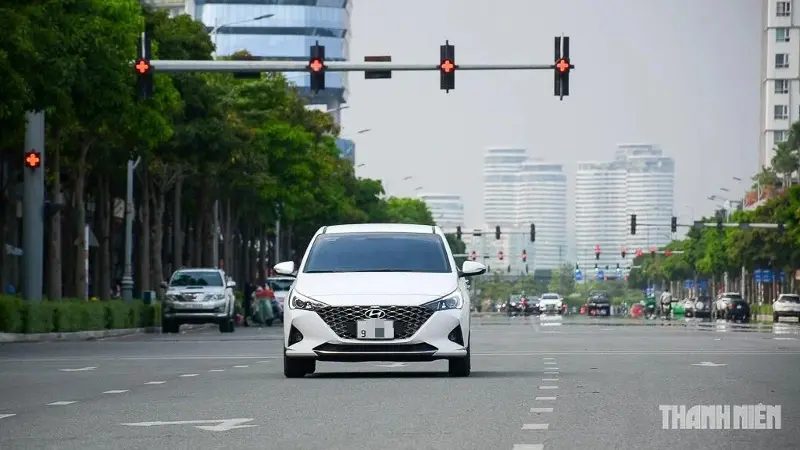
Therefore, instead of trying to drive as slowly as possible, drivers should maintain a speed appropriate to traffic conditions, accelerate gradually, and keep a steady speed whenever possible.
Photo: BA HUNG
With automatic transmissions, modern gearboxes can often automatically select the appropriate gear based on speed, engine load, and throttle opening. Therefore, instead of trying to drive very slowly, drivers should maintain a speed appropriate to traffic conditions, accelerate gradually, and keep a steady speed whenever possible. Drivers should also observe the road ahead to proactively reduce speed when there is a red light, a crossing, traffic congestion, or slow-moving vehicles. Avoiding sudden acceleration and braking will help reduce unnecessary fuel consumption.
Press the accelerator gently to increase speed, but maintain the gear in a lower position for an extended period.
Many people believe that the lighter you press the accelerator, the less fuel your car will use. This idea is correct in that you shouldn't accelerate suddenly, but pressing the accelerator too lightly and taking too long to reach the desired speed is also not optimal.
Especially with automatic transmissions, if the acceleration is too slow while the gearbox hasn't shifted to a higher gear, the engine may have to maintain its RPM for a relatively long time. In that case, the car will continue to consume fuel for an extended period to reach the desired speed.
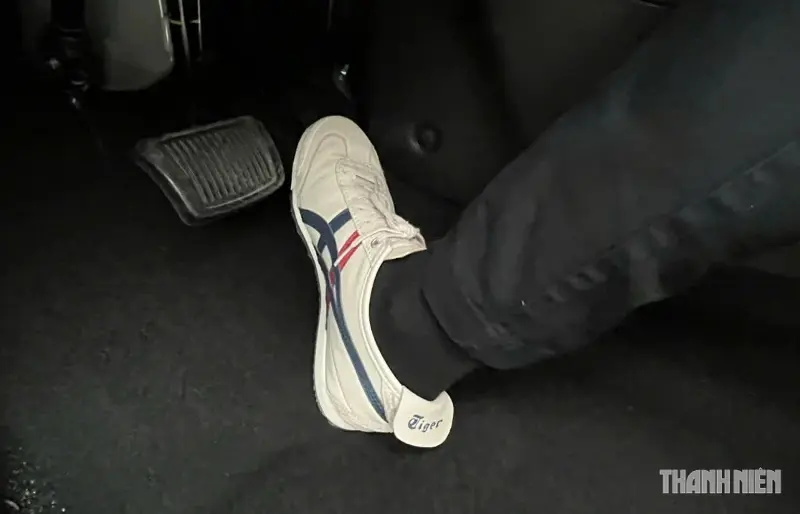
Pressing the accelerator lightly and taking too long to reach the desired speed is not the optimal approach either.
Photo: BA HUNG
However, this doesn't mean drivers should floor the accelerator. The appropriate approach is to accelerate gradually, steadily, and decisively, then maintain a stable speed when road conditions permit. With manual transmissions, drivers also need to shift gears appropriately according to speed and driving conditions, avoiding keeping the engine running at excessively high or low RPMs for extended periods.
Turning the engine off repeatedly when stopping the vehicle for short periods of time.
Turning off the engine during long stops can reduce fuel consumption due to idling. However, repeatedly turning the engine off and on again during very short stops isn't always beneficial.
In reality, if a car is only stopped at a red light for a few tens of seconds waiting for the vehicle in front to move forward, or temporarily stopped to wait for a relative, constantly turning the engine on and off is both inconvenient and inappropriate. Many modern cars are equipped with a Start/Stop system, which automatically shuts off the engine when the car stops and restarts it when the driver resumes driving. This system is designed by manufacturers to reduce the time the engine idles.
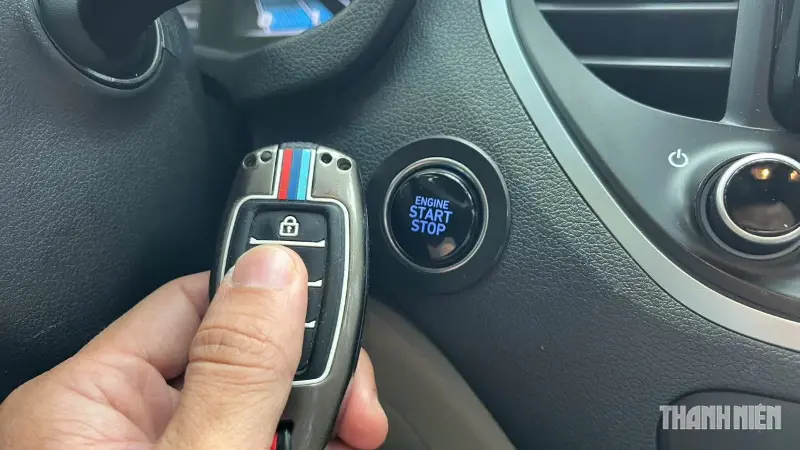
Turning the engine off and on repeatedly during very short breaks isn't always beneficial.
Photo: BA HUNG
Therefore, drivers should not mechanically turn off the engine every time the vehicle stops. For long stops, such as waiting for passengers for an extended period, turning off the engine might be more reasonable. However, in constantly changing traffic conditions, drivers need to prioritize vehicle control and safety.
Driving with underinflated tires because you think the car will be "smoother" and have better grip.
Underinflated tires can make a car feel "softer" when driving on rough roads. This is why some drivers intentionally reduce tire pressure, thinking it will make the ride smoother and provide better traction. However, underinflated tires increase rolling resistance, forcing the engine to work harder to maintain motion. This can lead to increased fuel consumption.
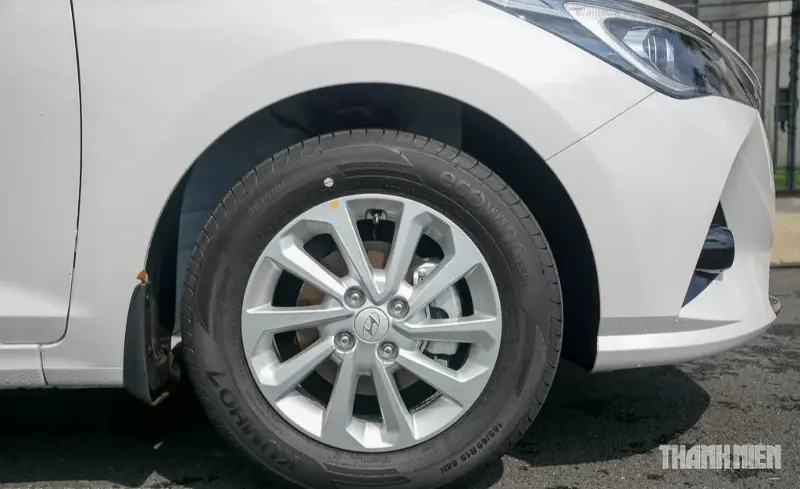
Underinflated tires increase rolling resistance, forcing the engine to work harder to maintain motion, which can lead to increased fuel consumption.
Photo: BA HUNG
Furthermore, low tire pressure affects handling, vehicle stability, and heat distribution across the tires. These factors are especially important when driving long distances or at high speeds. Drivers should check tire pressure regularly, especially before long trips. Recommended pressure specifications are usually indicated by the manufacturer on a label located on the door pillar or fuel filler cap. Do not inflate tires based on whether they feel "soft" or "hard" while driving. The correct pressure should be based on the specifications of each specific vehicle model.
Go downhill and shift to neutral (N) to let the car coast, saving fuel.
This is a common but potentially risky misconception. When going downhill, shifting the gear lever to neutral (N) causes the engine to disconnect from the drivetrain and maintain idle speed. In this state, the engine continues to consume fuel to maintain operation.
Meanwhile, in many modern electronically fuel-injected cars, when the vehicle is going downhill, if the driver releases the accelerator and the transmission remains in the appropriate gear, the engine management system can reduce or stop fuel injection under suitable conditions. At the same time, the engine simultaneously generates braking force to help control the vehicle's speed.
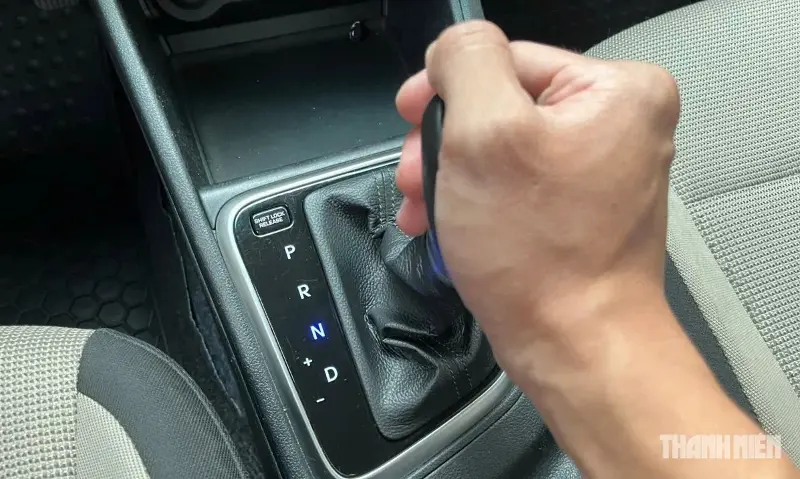
When shifting to neutral (N) mode, the engine must still maintain its idle speed.
Photo: BA HUNG
When shifting to neutral (N), the engine still maintains its idle speed. More importantly, the vehicle loses its engine braking capability, forcing the driver to rely more heavily on the braking system, which poses significant risks and safety hazards, especially when descending long inclines. Continuous braking can cause the braking system to overheat, affecting its effectiveness. Therefore, instead of shifting to neutral and letting the vehicle coast, drivers should maintain the appropriate gear for road conditions, control speed, and use the brakes properly.
In the context of rising fuel prices, driving with a steady foot on the accelerator, avoiding unnecessary acceleration and deceleration, maintaining proper tire pressure, and performing regular vehicle maintenance are often more effective than anecdotal "fuel-saving" tips.