


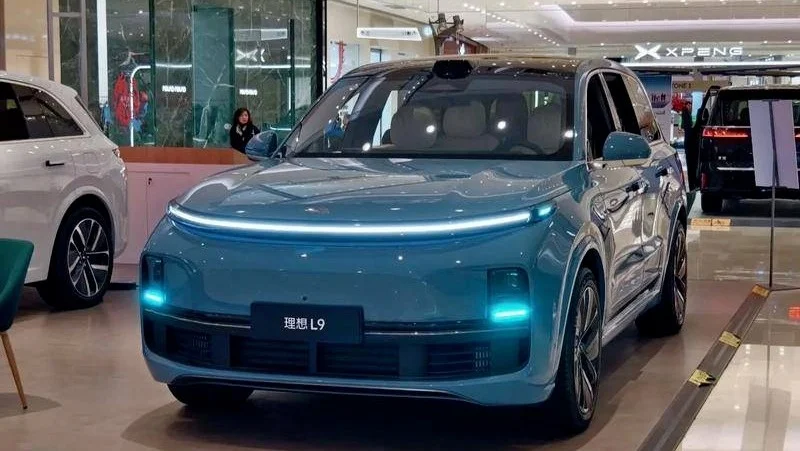
China's Ministry of Industry and Information Technology (MIIT) is preparing to tighten enforcement of the national standard GB4785 on vehicle lighting systems, thereby banning the installation of ADAS (Advanced Automotive Lighting Systems) green lights on passenger vehicles.
Starting with the new vehicle approval application period next month, any passenger car equipped with this "small green light" system will be denied factory approval. The China National Automobile Standards Commission is expected to soon issue supplementary regulations to the GB4785 standard to clarify the legal boundaries.
The current mandatory standard GB4785-2019 clearly stipulates that the exterior lighting systems of vehicles are only permitted to use four primary colors: white, red, yellow, and orange. Colors such as blue or green are not included in the permitted list. Therefore, equipping vehicles with blue ADAS warning lights has been in a legal "grey area" since its inception.
This trend started in August 2022 when the Li Auto L9 model was launched with five blue indicator lights. This design was immediately adopted by many major manufacturers such as Aito, Xpeng, Nio, and BYD. By the 2026 Li Auto L9 model, the company even integrated this light cluster into the "Star Ring" indicator light strip at the front of the car, automatically switching to blue whenever power steering is activated.
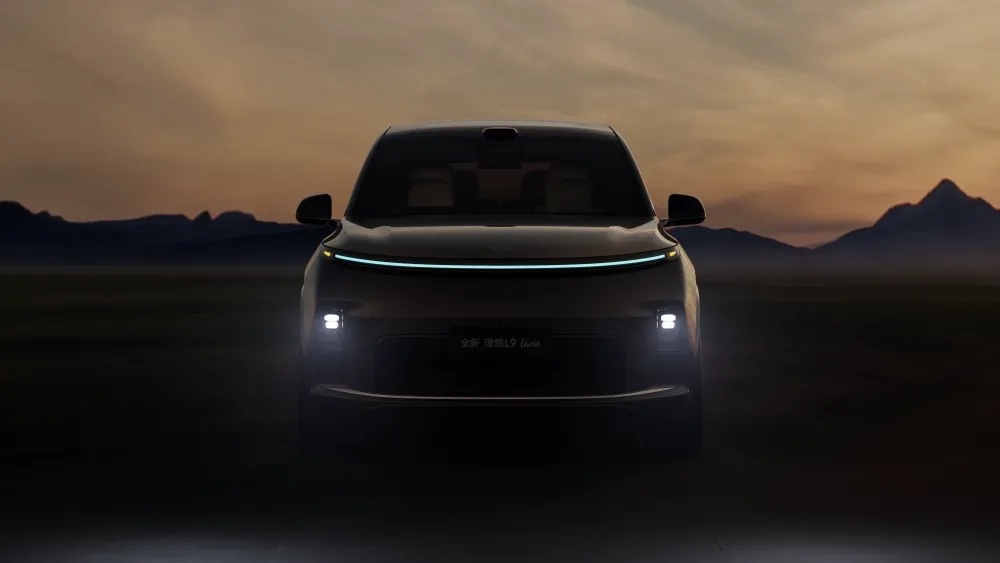
Blue LED strip lights on the Li Auto L9. Photo: Li Auto .
The regulatory intervention stemmed from intense debates about the effectiveness and safety of the equipment.
Opponents argue that the green light strip could distract other vehicles and pedestrians at night, or be easily confused with turn signals. Furthermore, many fear that drivers will view it as a "shield of liability," leading to complacency and complete reliance on the computer system.
Meanwhile, proponents maintain that the light strip provides a visual signal to let those around know the vehicle is operating in autonomous driving mode. This is considered especially necessary as self-driving technology becomes increasingly prevalent.
In response to stricter regulations, automakers in China are urgently seeking ways to adapt. Speaking to Yicai , a Geely representative stated that they are aware of the situation and are committed to strictly complying with national regulations.
For vehicles already on the market, MIIT is studying appropriate solutions. Meanwhile, for future models, experts believe that manufacturers may release an over-the-air (OTA) software update to change the light color or disable the feature.