



Yoga offers many benefits for young children, but practicing it too early or incorrectly can have the opposite effect if not properly guided.
Experts say yoga is suitable for children, but it's important to choose the right age, time, and exercises to ensure safety and effectiveness.
Yoga has long been known as a training method that helps balance physical and mental health, which is why many parents now introduce yoga to their children at a very young age, hoping it will help them become healthier, more flexible, and more confident.
However, the question arises: should children start practicing yoga at such a young age?
The answer isn't simply "yes" or "no," but depends on age, training method, and appropriate guidance.
Is yoga suitable for young children?
According to health experts, yoga can be perfectly suitable for children if properly regulated. Numerous studies show that yoga offers both physical and mental benefits for children, from improved flexibility to enhanced concentration.
Specifically, yoga can help:
- Increase muscle strength and endurance.
- Improves posture and supports bone development.
- Improves concentration and emotional control.
- Reduce anxiety and stress from a young age.
- Develop healthy exercise habits.
In fact, some educational programs have incorporated yoga into schools to support children's cognitive development and social skills.
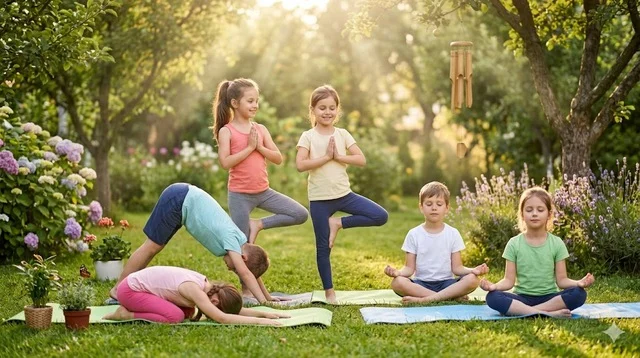
Children practice yoga with simple movements to help develop physically and mentally - Illustration
At what age can children start practicing yoga?
This is the issue that concerns many parents the most.
According to experts:
- Children from around 3 years old and up can begin to get acquainted with yoga through simple, fun movements.
- Younger children (under 3 years old) should not practice yoga in the true sense, as they lack the motor control and cognitive abilities to do so.
In preschool, yoga should be designed as a gentle, active game, incorporating storytelling and music, rather than focusing on technical skills.
Benefits of letting children practice yoga from an early age.
When practiced correctly, yoga can offer many long-term benefits:
1. Comprehensive physical development
Gentle stretching exercises help make children's bodies more flexible, supporting height development and bone growth.
2. Improve concentration
Yoga helps children develop their attention span – a crucial element in learning.
3. Regulating emotions
Children learn how to control their emotions, reducing anger and anxiety.
4. Increase self-confidence and social skills
Group activities in yoga help children become more sociable and confident in their communication skills.
Risks of letting children practice yoga too early or incorrectly.
Despite its many benefits, improper yoga practice for children can have the opposite effect.
1. Risk of injury
Children's bones and muscles are still developing, so practicing difficult or incorrect exercises can affect their spine and joints.
2. Inflicting psychological pressure
Forcing children to practice or demanding that they perform movements "perfectly" can cause them to lose interest or even become stressed.
3. Inappropriate training time.
Young children have short attention spans, so each training session should only last about 15–20 minutes.
4. Misunderstanding the nature of children's yoga.
Yoga for children is not a "miniature" version of adult yoga, but rather needs to be specifically designed to suit the psychological and physiological needs of children.
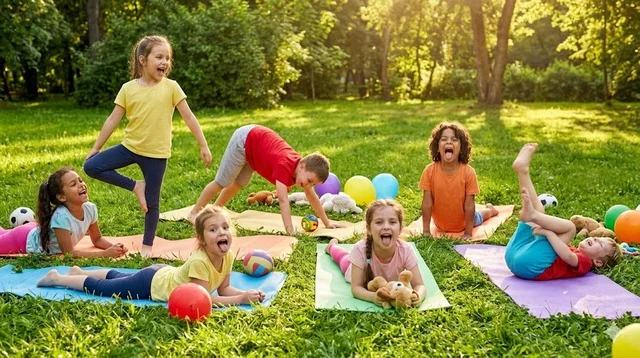
Yoga for children should be fun and not focus too much on technique - Illustration
What should parents keep in mind when enrolling their children in yoga classes?
To ensure safety, experts recommend:
Not prioritizing technical skills.
- Let children learn naturally and enjoyably, instead of forcing them.
- Prioritize simple exercises.
- Choose gentle poses such as cat-cow, child's pose, stretching...
- Short timeframe, flexible.
- Each session should only last 10–20 minutes, to avoid tiring or boring the child.
- There is always someone to guide you.
- A coach or adult should be present to ensure safety.
- Create a safe environment
- The training space needs to be spacious and free of dangerous obstacles.
When should children not practice yoga?
Not all children are suitable for yoga at all times. Caution is needed if:
- Children with bone and joint problems or cardiovascular issues.
- Very young children (under 3 years old).
- Children are not interested in or are forced to practice.
- In these cases, parents should consult a doctor before allowing their child to practice these exercises.
Yoga is a healthy activity that can offer many benefits to children if done correctly. However, having children practice too early or using incorrect methods can have the opposite effect.
The important thing is not to start as early as possible, but to start at the right time, in the right way, and in a way that is appropriate for each child.
